
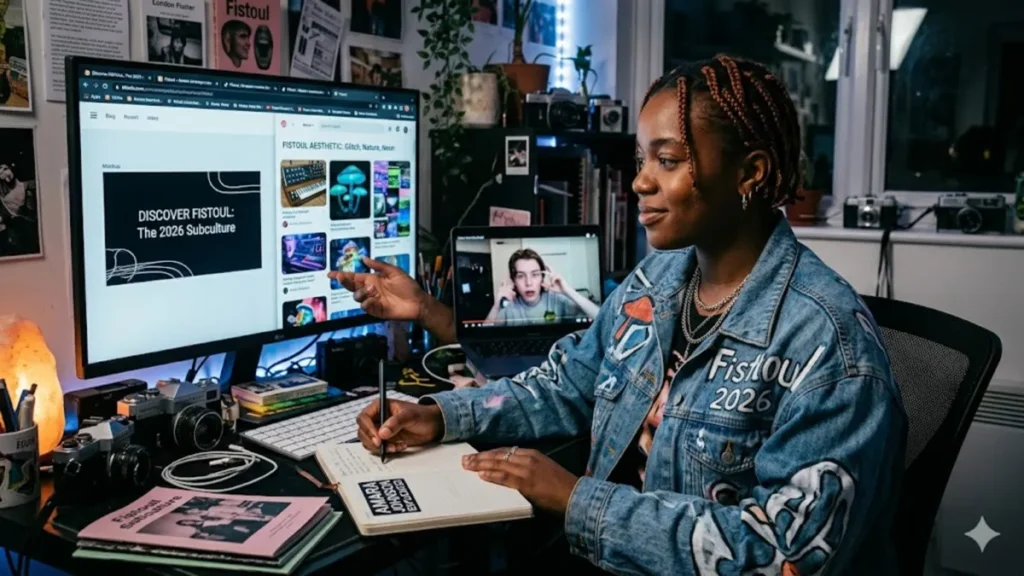
Every few years, the internet births a term that acts as a secret handshake for those in the know. In 2026, that word is Fistoul. If you’ve spent any time on highly curated social feeds or niche community hubs lately, you’ve likely seen the hazy, hyper-saturated imagery and the “deliberately unpolished” philosophy that defines this movement. It isn’t just a hashtag; it’s a full-blown digital rebellion against the sterile, AI-perfected minimalism that dominated the early 2020s.
Fistoul represents a fascinating intersection of nostalgia and futurism. It draws from the grit of early 2000s “indie-sleaze” but updates it with the glitchy, high-tech tools of the current era. As a culture editor, I’ve watched many trends flicker and fade, but this one feels different—it feels like a collective sigh of relief from a generation tired of being “on-brand.” In this article, we’ll explore the roots of Fistoul, its visual DNA, and why it has become the definitive lifestyle choice for the digitally fatigued in 2026.
The Origins of the Fistoul Movement
While it’s hard to pin down the exact moment a vibe becomes a movement, Fistoul traces its lineage back to underground creative collectives in London and Berlin. It began as a reaction to the “Global Village” aesthetic—that clean, corporate look that made every coffee shop and every Instagram profile look identical. The early adopters of Fistoul wanted something that felt tactile, flawed, and human.
The term itself is believed to be a portmanteau of “fissure” and “soul,” suggesting a break or a crack in the polished exterior of digital life that allows the true self to leak out. In mid-2025, we saw the first glimmers of this on private Discord servers, where artists began sharing “anti-optimized” content. By early 2026, it had migrated to the mainstream, influencing everything from high-fashion editorial shoots to the way college students decorate their dorm rooms.
Visual DNA: Decoding the Fistoul Aesthetic
If you’re trying to spot Fistoul in the wild, you have to look for the “intentional error.” This isn’t about being messy for the sake of it; it’s about curated chaos. It rejects the 4K clarity of modern smartphone cameras in favor of lens flares, motion blur, and a color palette that feels like a sunset viewed through a smoggy window.
The Color Palette of 2026
Fistoul leans heavily on “industrial warmth.” Think deep copper, bruised purples, and an almost sickly neon green used sparingly. It’s a palette that feels both organic and synthetic at the same time. On sites like Pinterest and Instagram, these colors are often used in high-contrast settings, creating a mood that is simultaneously inviting and slightly unsettling.
Texture and Grain
Digital grain is a hallmark of this style. While AI tools are now capable of removing every hint of noise from a photo, Fistoul enthusiasts do the opposite. They use “lo-fi” filters and analog film emulators to add grit. This texture serves as a reminder that the world is tactile, even when we are viewing it through a glass screen. It’s the visual equivalent of listening to a vinyl record—crackles, pops, and all.
The Fistoul Lifestyle: Beyond the Screen
For the core community, Fistoul isn’t just a way to edit photos; it’s a way to live. This manifests in a return to analog hobbies—film photography, physical journaling, and even a resurgence in “dumb phones” that lack internet connectivity. In my conversations with trendsetters in this space, the recurring theme is “presence.”
The lifestyle prioritizes “offline-first” experiences. We are seeing a boom in Fistoul-inspired events—unplugged concerts, dimly lit community dinners, and workshops focused on “imperfect” crafts like pottery or hand-sewing. It’s a culture that celebrates the process rather than the final, postable result. In a world where every moment is a potential “content opportunity,” Fistoul advocates for the moments that remain unrecorded.
Why Fistoul is Dominating 2026
The dominance of this trend can be attributed to “algorithmic burnout.” By the end of 2025, users began to feel the weight of constant optimization. We were being told what to watch, what to buy, and even how to feel by increasingly efficient AI models. Fistoul is the counter-current. It is unpredictable, slightly messy, and purposefully difficult for an algorithm to categorize.
By embracing “the fissure,” people are reclaiming their autonomy. There is a certain power in posting a photo that isn’t flattering or sharing an opinion that isn’t “trending.” It’s about authenticity in its rawest form. For brands, this has been a challenge; you can’t easily “sell” Fistoul because as soon as it looks like a marketing campaign, it loses its soul.
Expert Tips for Embracing the Aesthetic
If you’re looking to incorporate a touch of Fistoul into your own digital or physical space, remember that less is more. This isn’t about a total overhaul; it’s about subtle shifts in perspective.
- Embrace the Blur: Next time you take a photo, don’t wait for the autofocus. Capture the movement. The most “Fistoul” images are the ones that capture a feeling rather than a sharp subject.
- Mix Eras: In your home or wardrobe, pair something hyper-modern (like a sleek tech gadget) with something aged or thrifted. The contrast is where the “soul” lives.
- Limit Your Polish: Try a “no-edit” week on social media. Post the raw files. It’s terrifying at first, but it’s the quickest way to find your community within this movement.
- Physical Over Digital: Choose a physical notebook over a note-taking app once a day. The tactile feel of pen on paper is the ultimate Fistoul luxury in 2026.
Frequently Asked Questions
Is Fistoul just another name for “Indie Sleaze”?
While they share some DNA, specifically the love for grain and flash photography, Fistoul is more tech-aware. Indie sleaze was a reaction to 90s minimalism; Fistoul is a reaction to AI-generated perfection. It’s much more about the “digital ghost” in the machine.
How do I join the Fistoul community?
There isn’t a single “sign-up,” but following niche curators on platforms like Are.na or searching for specific glitch-art hashtags is a good start. The community is generally very welcoming to anyone who values authenticity over perfection.
Does Fistoul influence fashion?
Absolutely. We’re seeing a move toward “deconstructed” clothing—exposed seams, distressed fabrics, and layers that don’t quite make sense on paper but look incredible in motion. It’s about looking like you’ve lived in your clothes, not like you just stepped out of a catalog.
Is this trend just for Gen Z?
Not at all. While younger creators are driving the visual style, the “Fistoul philosophy” of digital intentionality is resonating deeply with Millennials and Gen X professionals who remember life before the “perfect” internet took over.
What is the future of Fistoul?
In late 2026, we expect to see this influence architectural design—moving away from open-concept “white box” spaces toward more partitioned, atmospheric, and “textured” interiors that offer a sense of privacy and mood.
Can brands use the Fistoul aesthetic?
Only if they are willing to be honest. The community is very quick to call out “manufactured grit.” Brands that want to play in this space need to show their behind-the-scenes mistakes and be transparent about their processes.
The Beauty of the Break
We often think of a “fissure” as a bad thing—a crack that needs to be repaired. But the Fistoul movement teaches us that the crack is where the light gets in. In our rush to make our digital lives seamless, we’ve accidentally smoothed over the very things that make us human.
By the end of 2026, I suspect we won’t be talking about Fistoul as a “trend” anymore, but as a standard way of interacting with technology. It’s a reminder that we don’t have to be perfect to be relevant. We just have to be real. So, go ahead—leave the blur in the photo, keep the smudge on the lens, and find the soul in the “fistoul.”
To explore more insights like this, click here to learn more about culture and history topics.