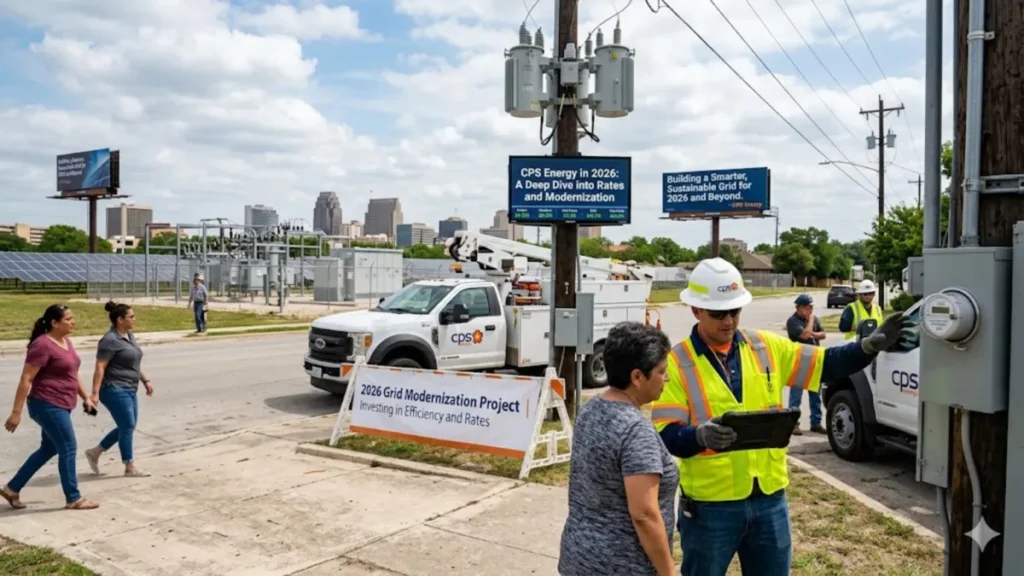
San Antonio residents are currently facing a pivotal moment in their relationship with the nation’s largest municipally owned utility. As we move through 2026, CPS Energy is no longer just a provider of electricity and gas; it has become a central figure in a complex narrative of infrastructure debt, rapid urban growth, and a high-stakes transition toward renewable energy. For the average ratepayer, the immediate concern isn’t the “energy mix” or “grid resiliency” in the abstract—it is the bottom line on the monthly statement. With rates having climbed significantly since 2020, understanding the mechanics behind your bill is no longer optional.
This deep dive examines the current state of CPS Energy in 2026. We will analyze why rates continue to trend upward, the reality of solar economics after the expiration of major incentives, and how the utility’s “Vision 2027” strategy is reshaping the San Antonio grid. Whether you are a homeowner looking to offset rising costs or a business leader tracking local economic indicators, this report provides the data-driven insights necessary to navigate the current utility environment.
The 2026 Rate Landscape: Why Your Bill is Rising
As of early 2026, residential electricity rates for CPS Energy customers have reached an average of approximately 12.5 cents per kilowatt-hour (kWh). While this remains below the national average and competitive within the ERCOT (Electric Reliability Council of Texas) market, it represents a nearly 32% increase from 2020 levels. This upward trajectory is driven by a trifecta of financial pressures: legacy debt, fuel volatility, and the “growth tax” of a booming San Antonio population.
A significant portion of current bill increases stems from the 2021 Winter Storm Uri debt recovery. The utility incurred massive costs to keep the lights on during that historic freeze, and those costs are being amortized over years. Furthermore, the “Fuel Adjustment Charge” has become a volatile component of the monthly statement. Because CPS Energy still generates roughly 45-50% of its power from natural gas, fluctuations in the global gas market pass directly to the consumer. In 2026, we are seeing these adjustments account for nearly 2.8 cents of the total per-kWh rate.
Infrastructure modernization is the third pillar of rate pressure. The utility is currently in the middle of a massive Enterprise Resource Planning (ERP) overhaul. The legacy systems that managed customer data and grid operations were nearly two decades old—an eternity in the digital age. Replacing these systems, while necessary for security and efficiency, requires capital that is ultimately sourced from the rate base.
Solar Economics in 2026: Life After the Rebate
For years, San Antonio was a “solar darling” due to aggressive local rebates. However, the landscape in 2026 has shifted dramatically. The residential SolarHost rebate program is now fully depleted, and no replacement has been announced. Compounding this is the expiration of the federal Section 25D residential tax credit on December 31, 2025.
For a homeowner considering solar today, the math has changed from “upfront savings” to “long-term self-consumption.” CPS Energy currently pays an “avoided-cost” rate of approximately 3–4 cents per kWh for any energy you export back to the grid. Contrast this with the 12.5 cents you pay to buy energy from them, and the strategy becomes clear: you must use as much of your own solar power as possible.
This shift has made home battery storage almost mandatory for new solar installations. By storing midday solar excess and using it during the 6:00 PM to 9:00 PM peak, residents can maximize the value of every photon captured. Without a battery, exporting power at 4 cents only to buy it back later at 12 cents results in a significantly longer payback period—often stretching to 11 or 12 years compared to the 7-year periods we saw earlier this decade.
Vision 2027 and the Transformation of Generation
CPS Energy is currently executing “Vision 2027,” a strategic roadmap designed to phase out aging, less efficient power plants in favor of a diversified energy mix. The goal is to balance reliability with the City of San Antonio’s Climate Action & Adaptation Plan (CAAP), which targets carbon neutrality by 2050.
A major milestone in 2026 is the expansion of utility-scale battery storage. In late 2025 and early 2026, CPS issued Requests for Proposals (RFPs) for up to 500 MW of additional storage. This isn’t just about “going green”; it’s about grid stability. Batteries allow the utility to “firm up” intermittent solar and wind power, providing a buffer when the sun goes down or the wind dies during peak demand hours.
On the traditional side, the utility recently acquired over 1,600 MW of natural gas capacity to ensure base-load reliability. This move was controversial among some environmental groups, but from a business and engineering perspective, it was a necessary hedge against the inherent instability of the ERCOT grid during extreme weather events. The 2026 generation mix is roughly 40% renewable, a testament to the utility’s rank as a leader in Texas solar.
The Sustainable Tomorrow Energy Plan (STEP)
While rates are rising, the Sustainable Tomorrow Energy Plan (STEP) remains the primary vehicle for customer-side savings. In 2026, the program has evolved to focus heavily on “Demand Response.” This is the practice of incentivizing customers to reduce their usage during times of extreme stress on the grid.
The WiFi Thermostat Rewards program is a prime example. By allowing the utility to make minor adjustments to your thermostat during peak events, residents can earn an $85 enrollment credit and an annual $30 participation credit. In 2026, compatible devices include the latest Google Nest (4th Gen) and Amazon Smart Thermostats.
Beyond thermostats, STEP provides rebates for attic insulation, “cool roofs,” and heat pump installations. My analysis of the 2026 data suggests that a well-weatherized home in San Antonio can save up to 20% on annual cooling costs—a crucial buffer as summer temperatures continue to hit record highs in Central Texas.
Managing the Burden: Assistance and Affordability
With the cost of living rising across the board, energy affordability has become a critical issue for many San Antonio families. CPS Energy maintains several programs designed to prevent service interruptions for vulnerable populations.
The Affordability Discount Program (ADP) provides a monthly credit to income-qualified customers. Additionally, the Casa Verde program offers free weatherization services for residents who meet specific income criteria. This includes everything from duct sealing to LED light bulb replacement. In 2026, the utility launched a “Single Application” portal, which uses AI to automatically match customers with every assistance program they qualify for, including REAP (Residential Energy Assistance Partnership) and various city-level housing supports.
For those not qualifying for low-income assistance, the “Budget Payment Plan” remains the best tool for financial predictability. By averaging your yearly usage into equal monthly installments, you can avoid the “bill shock” that typically arrives in August when AC units are running 24/7.
Expert Tips for 2026 Energy Management
To thrive in the current utility environment, you must move from passive consumption to active management. Here are four advanced strategies:
- Prioritize the “Thermal Envelope”: Before spending $20,000 on solar, spend $1,500 on attic insulation and air sealing. The highest “Return on Investment” in energy is always reducing waste before adding production.
- Leverage Time-of-Use Insights: While CPS doesn’t have the same retail competition as Houston or Dallas, you can use the “My Energy Portal” to identify your peak usage hours. Shifting heavy loads (laundry, dishwashers) to late-night hours reduces the overall strain on the local transformer, contributing to long-term grid health.
- Monitor Your “Vampire” Loads: With the shift to remote work, home offices are full of devices in “standby” mode. In 2026, smart power strips that cut power to peripherals when the primary device is off are an easy win.
- Evaluate the Lease vs. Own Solar Model: Because the 30% federal tax credit (ITC) has expired for individuals, many 2026 solar installs are moving toward Leases or Power Purchase Agreements (PPAs). In these models, the third-party owner (who can still claim commercial tax credits) passes some of those savings to you through a lower monthly payment than your utility bill.
Frequently Asked Questions
Why did my CPS Energy bill increase in 2026?
Several factors are at play, including the ongoing recovery of debt from 2021’s Winter Storm Uri, rising costs for natural gas used in power generation, and a 4.25% base rate increase implemented to fund infrastructure modernization and grid reliability. Population growth in San Antonio also requires significant investment in new transmission lines and substations.
Are there still solar rebates available in San Antonio?
As of 2026, the residential SolarHost rebate program is fully depleted. However, commercial rebates may still be available for business owners. Homeowners can still benefit from a 100% property tax exemption on the added value solar provides to their home, but the direct upfront cash rebate from the utility is no longer active.
How does the WiFi Thermostat Rewards program work?
When you enroll an approved smart thermostat, you give CPS Energy permission to briefly adjust your temperature settings during “conservation events” (usually on very hot afternoons). In exchange, you receive an $85 bill credit upon enrollment and a $30 credit every year you stay in the program. You can opt out of any individual event at any time.
What is the “Vision 2027” plan?
Vision 2027 is CPS Energy’s strategic roadmap to transition the city’s power generation to a cleaner, more reliable mix. It involves retiring older coal and gas units, adding 3,000+ MW of solar and wind, and investing heavily in battery storage and hydrogen technology to ensure the grid remains stable as the city grows.
Can I choose a different electricity provider in San Antonio?
No. Because CPS Energy is a municipally owned utility, it has an exclusive service territory. Unlike the “deregulated” parts of Texas (like Houston or Dallas), you cannot shop for different retail electric providers. The trade-off is that CPS Energy’s rates are generally more stable and lower than the average rates found in deregulated markets.
What should I do if I can’t afford my energy bill?
You should immediately contact CPS Energy at (210) 353-2222 or use their online “Assistance Finder.” You may be eligible for the Affordability Discount Program (ADP), payment extensions, or weatherization assistance through Casa Verde. The utility is generally willing to set up installment plans to avoid service disconnection.
The evolution of CPS Energy in 2026 reflects the broader challenges of the American energy transition. We are moving away from the era of cheap, fossil-fuel-dependent power toward a more complex, technologically advanced, and capital-intensive grid. While the rising costs are a burden for many, the investments being made today in battery storage and system modernization are the “insurance policy” San Antonio needs to avoid the catastrophic failures of the past. By staying informed and utilizing the efficiency programs available, residents can take control of their energy future even as the landscape continues to shift.
Disclaimer: This article is for informational and educational purposes only and does not constitute financial or investment advice. Investments carry risk, and past performance does not guarantee future results. Always consult a qualified financial advisor before making investment decisions.
To explore more insights like this, click here to learn more about business topics.