The landscape of technical education is shifting rapidly as we move through 2026, yet certain institutions remain pillars of academic rigor. The centro politecnico superior (CPS) has long been a name synonymous with high-level engineering and architectural studies. For students and professionals looking to understand how traditional technical foundations meet modern AI-driven industry demands, analyzing the CPS framework offers a blueprint for success. You will learn about the specialized degrees offered, the research infrastructure that defines the school, and how it prepares graduates for a globalized workforce. This guide examines why this institution continues to be a focal point for European engineering excellence.
The Evolution of centro politecnico superior
Founded with the goal of centralizing technical expertise, the centro politecnico superior represents more than just a collection of classrooms. It serves as a bridge between theoretical mathematics and industrial application. In 2026, the school has integrated advanced computational modules into every branch of its curriculum, ensuring that a degree in industrial, telecommunications, or computer engineering is backed by modern fluencies.
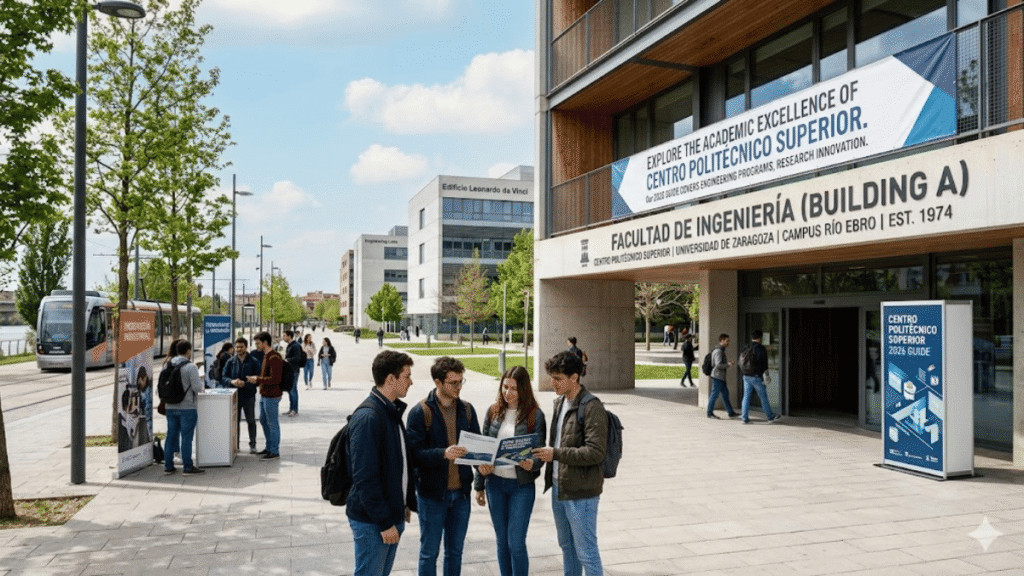
Historical context matters because it dictates the depth of the alumni network. CPS was established during a period of rapid industrial growth, which forced the faculty to maintain tight links with manufacturing and tech hubs. Today, those links have matured into robust internship programs and collaborative research labs. When you step onto the campus, you see the physical manifestation of this history—classic engineering labs standing alongside newer centers dedicated to robotics and sustainable energy systems.
Core Engineering Disciplines at CPS
The academic heart of the institution lies in its diverse range of engineering programs. Each department operates with a level of autonomy that allows for deep specialization while maintaining the interdisciplinary spirit required in 2026.
Industrial Engineering and Management
This remains the most popular track due to its versatility. Students focus on the design, improvement, and installation of integrated systems. In the current economic climate, the focus has shifted toward “Green Manufacturing” and supply chain resilience. You aren’t just learning how to build a machine; you are learning how to manage the lifecycle of a product within a circular economy.
Computer Science and Artificial Intelligence
The computer science track at CPS has undergone a significant transformation. While the fundamentals of algorithms and data structures remain, the 2026 curriculum emphasizes Edge Computing and Ethics in AI. The faculty focuses on creating “Architects of Logic” who can oversee complex systems rather than just writing code. This distinction is vital as automated coding tools become more prevalent in the industry.
Telecommunications and Electronics
As 6G networks begin to move from theory to early deployment, the telecommunications department at CPS has become a hub for signal processing research. Students work with high-frequency electronics and satellite communication protocols. The labs are equipped with the latest spectrum analyzers, providing a hands-on experience that mirrors the environments of companies like Nokia or Ericsson.
Research Centers and Innovation Hubs
A university is only as strong as its contribution to new knowledge. The centro politecnico superior hosts several research institutes that attract international funding and talent. These hubs are where the most significant “information gain” occurs for the students involved.
The focus in 2026 is heavily weighted toward sustainability. Research into hydrogen fuel cells and high-efficiency solar polymers takes center stage. These aren’t just academic exercises; many projects are co-funded by European Union grants aimed at achieving carbon neutrality. For a student, being involved in these labs means working on hardware that might be standard in the industry five years from now.
Furthermore, the Robotics and Cybernetics lab at CPS is currently exploring human-robot collaboration in logistics. By using computer vision and advanced sensors, researchers are developing systems that allow robots to navigate unpredictable warehouse environments safely. This practical application of theory is a hallmark of the CPS methodology.
The 2026 Student Experience and Campus Culture
Life at centro politecnico superior is rigorous, but the culture is built on peer-to-peer support. The complexity of the coursework often requires a collaborative approach to problem-solving. This mirrors the real-world engineering environment where “lone wolf” developers are rare.
Student organizations play a massive role in the ecosystem. From racing teams that build electric vehicles for international competitions to coding clubs that host 48-hour hackathons, the extracurricular life is designed to build a portfolio. In 2026, recruiters look at these projects just as closely as they look at GPAs. The campus itself has been upgraded with modular study spaces and high-speed fiber throughout, accommodating the hybrid learning models that have become standard.
READ: The Ultimate Guide to Duaction: How to Master Skills Fast in 2026
Career Paths for CPS Graduates
The primary reason for the institution’s enduring reputation is the high employability of its graduates. Companies across Europe specifically target CPS career fairs. The “CPS Stamp” on a resume indicates a candidate who has survived a demanding curriculum and possesses strong analytical skills.
Many graduates find roles in:
- Renewable Energy: Leading the transition to smarter grids.
- Aerospace: Working on the next generation of avionics and propulsion.
- FinTech: Applying engineering logic to high-frequency trading and blockchain security.
- Consulting: Helping firms navigate digital transformations using data-driven insights.
The school’s career office reports that over 90% of students secure a position within six months of graduation, often with starting salaries that exceed the national average for technical roles.
Expert Tips for Prospective Students
Navigating a technical degree at an elite level requires a strategy beyond just showing up to lectures. Based on current industry trends and academic standards, here are three pillars for success at CPS:
- Prioritize Mathematical Logic Early: Many students struggle in the second year because their foundation in calculus and linear algebra is shaky. Treat these subjects as the “language” of your career.
- Master One Low-Level Language: Even if you want to work in management, understanding C++ or Rust provides a perspective on system efficiency that high-level languages like Python cannot offer.
- Engage with the “Cátedras”: These are company-sponsored chairs within the university. They provide direct access to industry leaders and often lead to specialized thesis topics that are highly relevant to current market needs.
Frequently Asked Questions
What are the admission requirements for centro politecnico superior in 2026?
Admission is primarily based on academic performance in secondary education and specific entrance exams. For 2026, the school has also introduced a portfolio review for certain specialized tracks like Design Engineering, where previous technical projects or coding contributions are evaluated alongside test scores.
Does CPS offer English-taught programs?
Yes, while the primary language of instruction is Spanish, many Master’s programs and specific undergraduate modules are offered in English to accommodate international students. This is part of the school’s strategy to maintain a diverse, globalized academic environment.
How does the school integrate AI into its engineering curriculum?
AI is treated as a foundational tool rather than a separate subject. Students in all engineering branches learn to use machine learning models for data analysis, predictive maintenance, and structural optimization, ensuring they are prepared for the “AI-First” industry landscape of 2026.
Are there opportunities for international exchange?
CPS has extensive Erasmus+ agreements and partnerships with top-tier technical universities in the United States and Asia. Students are encouraged to spend at least one semester abroad to gain a global perspective on engineering challenges and cultural professional norms.
What is the average duration of an engineering degree at CPS?
Undergraduate degrees typically take four years to complete. However, many students opt for the integrated Master’s path, which adds an additional one to two years of study. This path is often required for full professional accreditation in certain regulated engineering sectors.
Summary of Technical Excellence
The Centro Politécnico Superior continues to define technical education by refusing to compromise on foundational rigor while aggressively adopting new technologies. Whether it is through groundbreaking research in sustainable energy or the production of highly skilled computer scientists, the institution remains a vital component of the global engineering community. For the student of 2026, a degree from this institution is not just a certificate; it is an entry point into a network of innovation that spans decades and continents. By focusing on both the “how” of technology and the “why” of its societal impact, CPS ensures its graduates are ready for the challenges of tomorrow.